
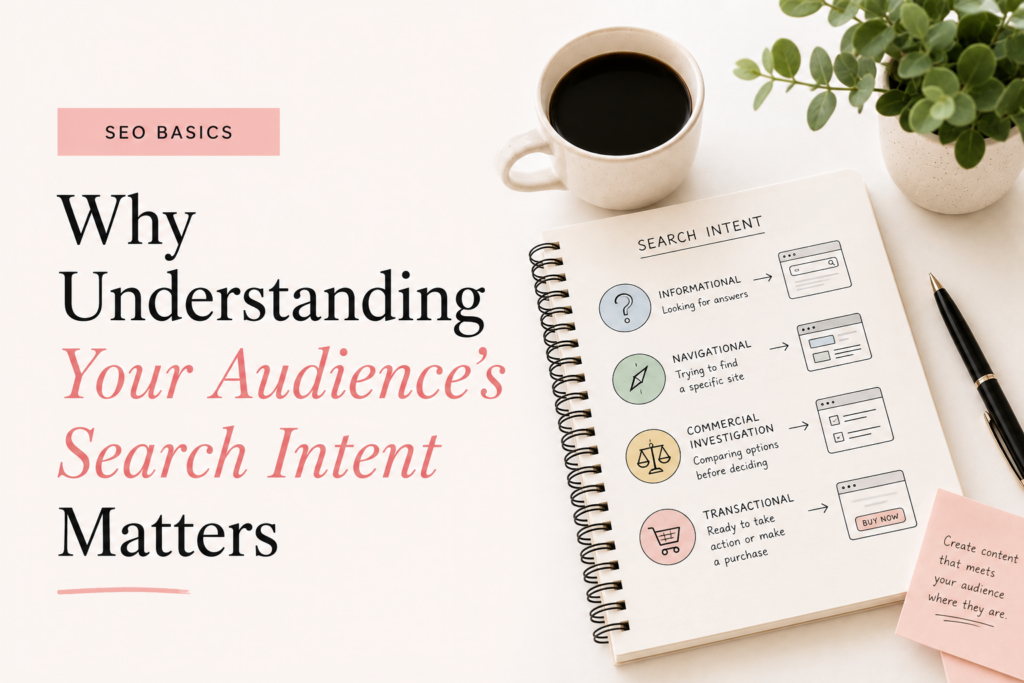
Every day, people make more than 16.4 billion search queries. Behind every single search is a reason.
Someone is looking for an answer. Someone wants to buy something. Someone wants to compare products before making a decision. Whatever they type into Google or any search engine, there’s always an intention behind it.
That intention is what we call search intent.
If you are into creating digital content, Search intent is one of those SEO fundamentals you simply can’t overlook. It tells search engines whether your page is likely to satisfy what the user is actually looking for. And that’s exactly what search engines want.
Their goal has never been to rank random pages. Their goal is to deliver the most suitable result for every search query.
Google, for instance, has spent years and invested billions of dollars trying to understand what people really mean when they type something into the search bar. It doesn’t just look at the words you use. It tries to understand the purpose behind those words.
That’s why matching search intent has become just as important as choosing the right keywords.
Generally, search intent falls into four main categories:
1. Informational Intent
It’s easy to assume you understand a keyword by simply reading it, but the intent behind it can be completely different.
Take this keyword:
“iPhone 17 Pro Max pros and cons.”
At first glance, this looks like a commercial keyword.
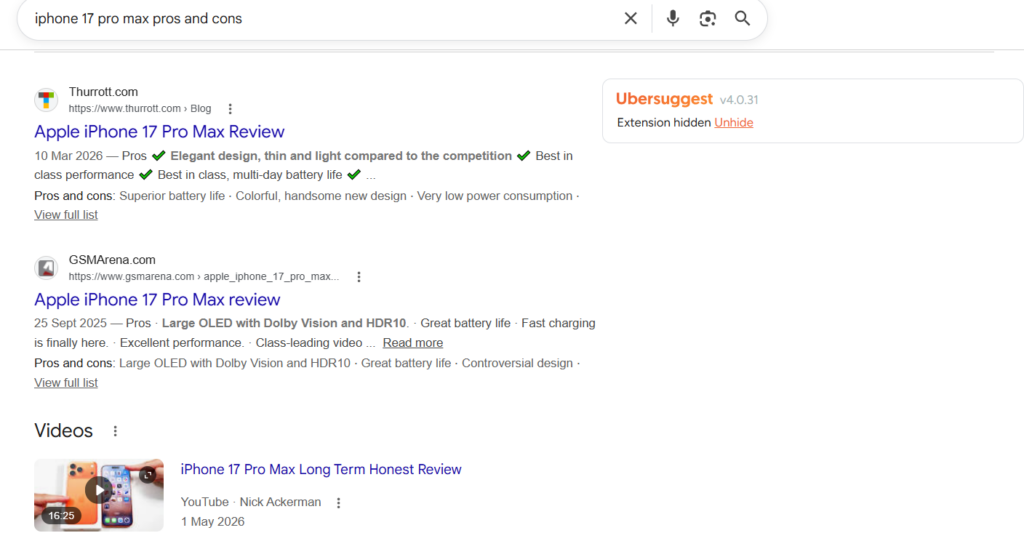
The person searching for it is probably considering buying the phone but hasn’t made up their mind yet. They want to compare the advantages and disadvantages before deciding whether it’s worth the money.
That tells you they aren’t looking to buy immediately. They’re still in the research stage.
Now compare it with this search:
“How to use iPhone 17 Pro Max camera features.”
This has a completely different intent.
The person already has the phone or is at least interested in learning how its camera works. They’re not looking for product reviews or shopping pages. They simply want instructions or guidance.
This is an informational search intent.
What Is Informational Intent?
Informational intent simply means the user wants to learn something.
These searches usually ask questions or include words like:
- Who
- What
- When
- Where
- Why
- How
For example:
- How to use iPhone 17 Pro Max camera features
- Homemade banana bread recipe
- What is search intent?
- Why is SEO important?
The goal isn’t to buy anything. It’s to get useful information or learn a new skill.
If someone searches for “Homemade banana bread recipe,” showing them a page selling baking equipment isn’t going to satisfy their search. They want a recipe, ingredients, instructions, and maybe a few baking tips.
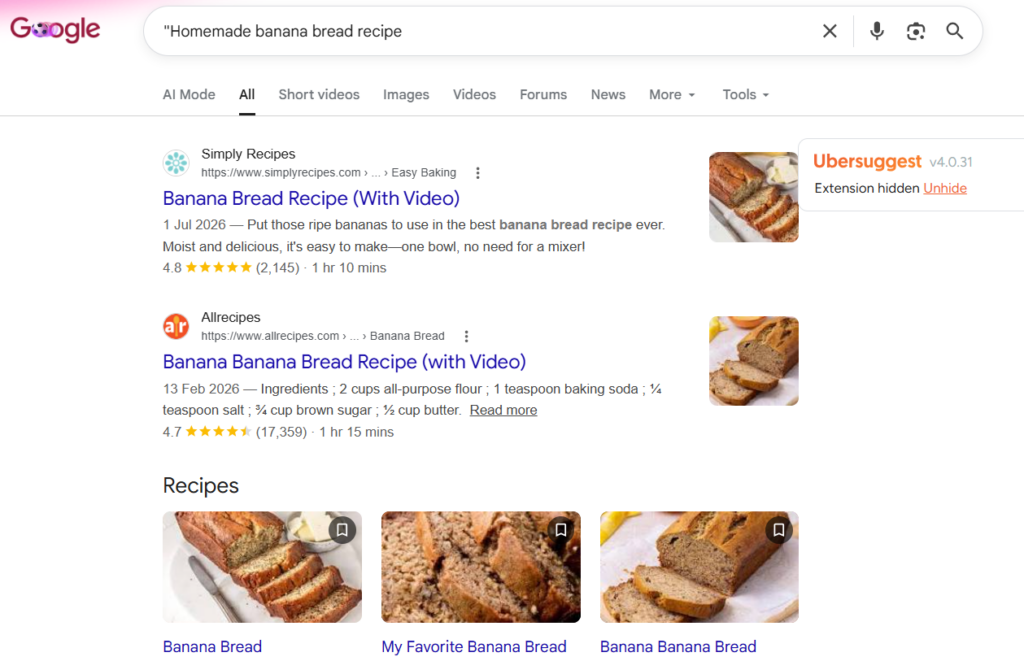
Understanding that difference is what search intent is all about.
2. Navigational Search Intent
Not every search is about discovering new information. Sometimes, people already know where they want to go they’re simply using a search engine as a shortcut.
This is known as navigational search intent.
Instead of typing a website’s full address into the browser, users search for the brand, product, or service they already have in mind.
For example:
- Facebook login
- YouTube Studio
- Ahrefs Blog
- Canva pricing
- Gmail
Someone searching for “Canva pricing” isn’t looking for a comparison of graphic design tools. They’ve already chosen Canva and want to view its pricing plans.
Likewise, a search for “Ahrefs Blog” tells Google that the user wants to visit Ahrefs’ blog—not read a third-party article about SEO.
If your content targets navigational keywords that are strongly associated with another brand, it’s unlikely to rank well because Google understands the user’s destination.
Before targeting a keyword, ask yourself:
Is the user trying to find information, or are they simply trying to reach a specific website or brand?
That simple question can save you from creating content that has little chance of succeeding.
3. Commercial Investigation Search Intent
Some people know they want to buy something, but they haven’t decided what to buy.
This stage is known as commercial investigation.
They’re researching, comparing options, reading reviews, and weighing the pros and cons before making a decision.
Typical searches include:
- Best CRM software for small businesses
- Ahrefs vs Semrush
- Best laptops for graphic designers
- iPhone 17 Pro Max pros and cons
- Best email marketing software
Let’s go back to the earlier example:
“iPhone 17 Pro Max pros and cons.”
The person isn’t asking how the phone works, nor are they ready to click “Buy Now.” They’re gathering information to decide whether it’s the right choice.
Content that satisfies this type of search usually includes:
- Product comparisons
- Reviews
- Advantages and disadvantages
- Feature breakdowns
- Pricing comparisons
- Real-world experiences
- Recommendations for different user needs
If someone is still evaluating their options, a page that immediately pushes a sale often feels unhelpful. What they need first is confidence that they’re making the right decision.
4. Transactional Search Intent
Transactional intent is the closest a user gets to taking action.
At this point, they’ve already done their research and are ready to complete a purchase, sign up, download, or book a service.
Searches often include words such as:
- Buy
- Order
- Subscribe
- Download
- Book
- Hire
- Get
- Free trial
Examples include:
- Buy iPhone 17 Pro Max
- Subscribe to Ahrefs
- Book a hotel in Lagos
- Download Adobe Acrobat Reader
- Hire an SEO consultant
Someone searching for “Buy iPhone 17 Pro Max” isn’t looking for a lengthy review or a comparison with competing phones. They’ve already made up their mind and want the quickest path to completing the purchase.
The best pages for transactional searches remove unnecessary friction by making it easy to take the next step. They typically include:
- Clear pricing
- Product or service details
- Strong calls to action
- Simple checkout or sign-up processes
- Trust signals such as reviews, guarantees, or secure payment information
When a user has transactional intent, they don’t need more persuasion—they need a smooth and straightforward buying experience.
Why Search Intent Matters
Many website owners spend hours researching keywords, but rarely pay attention to the reason people are searching in the first place.
Even if you target a high-volume keyword, your page may never perform well if it doesn’t satisfy what users expect to find.
Imagine someone searches for “best laptops for graphic designers.”
If they land on a page that simply sells one laptop without comparing different options suitable for designing, they’ll probably leave and continue searching elsewhere.
Google notices when users don’t find what they’re looking for. Over time, pages that better satisfy the search intent are more likely to rank above yours.
SEE ALSO: How to Write for Your Ideal Reader Without Guessing Who They Are
Search Intent Helps You Create Better Content
Instead of asking,
“Which keyword should I target?”
Ask,
“What is this person actually trying to accomplish?”
When you answer that question first, your content naturally becomes more useful.
You’re no longer writing just to rank on search engines.
You’re writing to solve a problem, answer a question, or help someone make a decision.
And that’s exactly the kind of content search engines want to recommend.
Final Thoughts
Before writing your next blog post or landing page, take a few moments to understand what your ideal searchers actually want, using those keywords.
Are they trying to learn something?
Are they comparing options?
Or are they ready to make a purchase?
The better your content matches that intent, the more likely it is to satisfy both your readers and search engines.
Because in SEO today is about meeting the reason behind every search.